
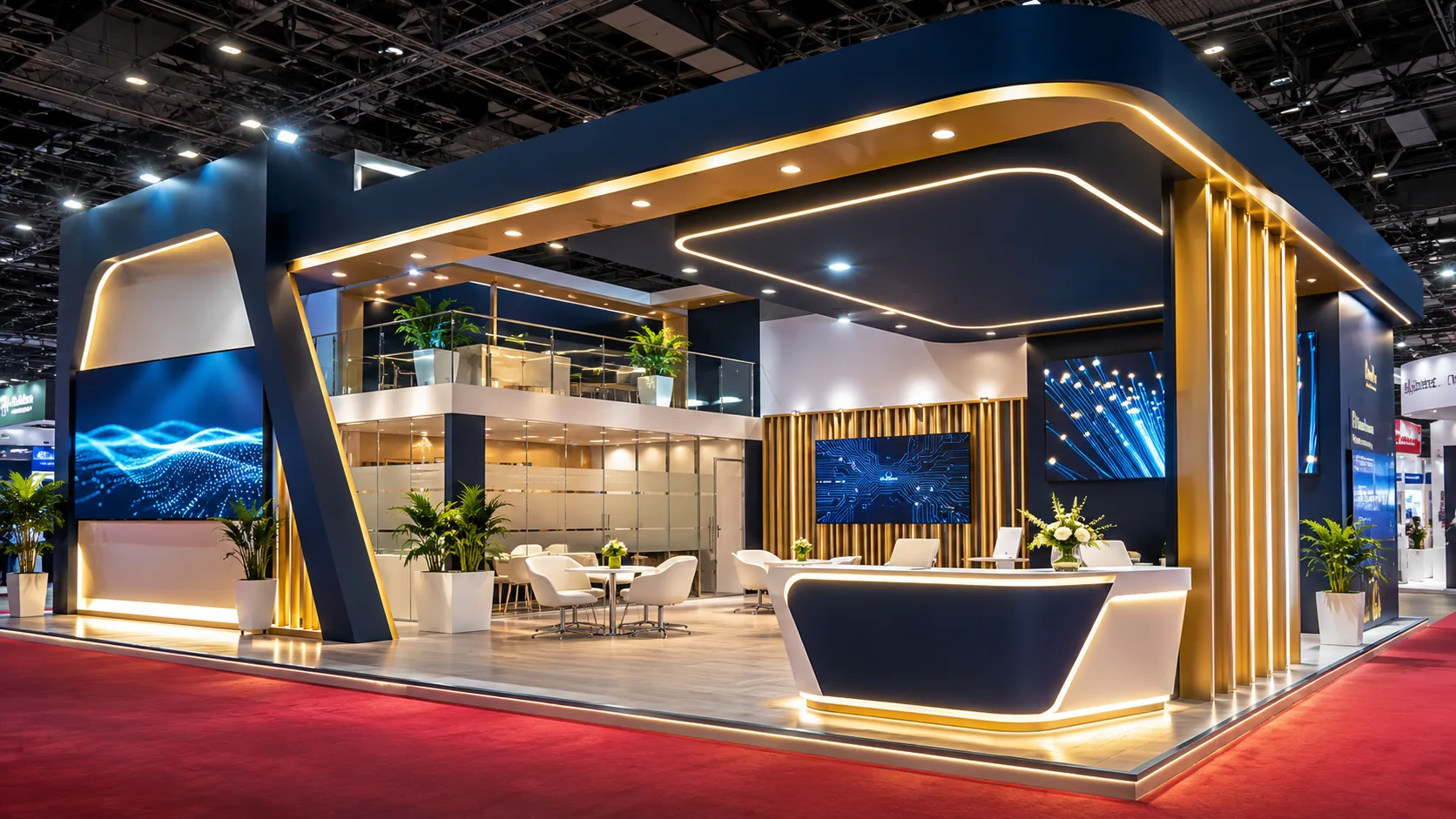
A good exhibition stall does more than look impressive in a rendering. It helps visitors understand what your business offers and makes it easier for your team to start useful conversations. That outcome depends on the decisions you make before design begins.
Use this 12-point checklist to prepare a clearer brief and avoid late-stage changes.
Start with purpose and people
- Agree on one business objective. Are you introducing a product, meeting distributors, generating qualified inquiries or demonstrating an entire portfolio? Choose a primary goal, then define what success looks like.
- Know who will visit. A technical engineer needs a different experience from a senior procurement leader. List your priority audiences and the questions each is likely to ask.
- Choose the message visitors should remember. Avoid putting every product claim on the fascia. Write one clear benefit-led headline, then use the supporting zones to prove it.
- Rank your products. Identify the hero attraction, supporting exhibits and items that can be shown digitally. Share the product list early with dimensions, weight and electrical needs.
Design around how people move
- Confirm the actual site. Send the hall number, location, stall dimensions, open sides, pillar locations, permitted construction height and any organiser restrictions.
- Map the visitor journey. Decide where visitors enter, what they notice first, where demonstrations happen and how conversations continue without blocking the aisle.
- Plan meetings and hospitality. Estimate how many staff, visitors and simultaneous discussions need to fit. A large lounge is useless if it squeezes product visibility.
- Consider accessibility and comfort. Check step-free entry, clear circulation, lighting, readable graphics and practical standing space around demos.
Make execution practical
- Share the technical schedule. List display power, internet, screens, rigging needs, water or compressed air, along with the equipment supplier and installation owner.
- Set a realistic budget. Separate design and fabrication from venue services, logistics, AV, electrical connections, taxes and contingency. Compare proposals on scope, not only headline price.
- Define approval milestones. Agree on concept, 3D, final drawings, graphics, procurement, fabrication and onsite sign-off dates. Name the approver for each stage.
- Plan the follow-up. Decide how the team will capture visitor details, qualify interest, assign ownership and reconnect after the event.
A better brief creates a better exhibition
When priorities are clear, designers can spend less time guessing and more time creating an effective environment. For your next show, begin with a single-page summary covering your business goal, top products, audience, booth rules and budget.
Planning an exhibition? Share your brief with Peckterra and begin with the decisions that matter.